Looking back, the various phases of my life join together into a logical sequence. A red thread becomes visible.
Family as the source
It begins with the family as the source from which I have always been able to draw fresh strength and inspiration: my harmonious parental home, where everything revolved around nature, the forest and the hunt.
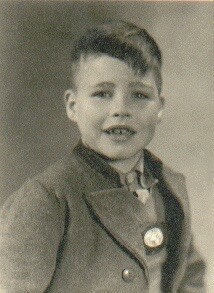
Part of this was the exemplary "triumvirate" of my grandmother Iltgen, my mother and my godmother Conny. While the men were at the front or held as prisoners of war, the three held together through thick and thin and did everything they could to spare us children any sense of want — and to give us a Christian outlook on life and a comprehensive education.
Cologne Cathedral above a sea of rubble
The immense destruction of the war and the human suffering bound up with it left a formative mark on us children.
As we approached the city of Cologne in early 1946 in our rickety Opel P4, year of make 1928, my mother recalled a wager from her own childhood and said: Whoever sees the cathedral first gets ten Reichspfennig. No sooner said than I, unexpectedly, was already pointing in the direction of the immense building and claiming the prize — for in 1946 the cathedral was visible from far off, no longer hemmed in by surrounding buildings as it had been before the destruction of Cologne and as it became again after the reconstruction.
So the cathedral stood, once the tallest building in the world, majestically raised to its 157 metres. Though severely damaged by eighteen direct bomb hits, it loomed commandingly over an enormous sea of rubble, in which hundreds of women shovelled debris into mining trolleys. The Rhine before the cathedral was still entirely impassable — a kind of disorderly graveyard of ships, filled to the brim with the remains of once-proud Rhine bridges and barges.
On the makeshift streets and access paths, the many war-wounded stood out: some without arms and legs, who moved themselves along, in pain and hunger, on crudely cobbled boards with wheels — an apocalyptic sight that haunts me to this day. There could scarcely have been a more compelling appeal to peace and to the renunciation of war.
A foster father in ecological thinking
A decisive influence on the direction of my career was my doctoral supervisor, the renowned forestry scientist Prof. Ernst Assmann. Under his leadership, in 1966, a substantial ecological research project was begun in the Ebersberg Forest near Munich. It became internationally known as the Ebersberg Ecology Project and developed into an important German contribution to the International Biological Programme (IBP).
Assmann asked me to work with him as his scientific assistant. Two years later I was able to take my doctorate with him on the Ebersberg Ecology Project at the Ludwig-Maximilians University of Munich. During this time Assmann, who looked after me with great kindness, became my foster father in ecological thinking and work. He introduced me to the international world of cooperative ecological research and gave me the opportunity to acquaint myself with the state of ecological research in the United States, made possible by a scholarship from the German Research Foundation.
The Negev — the decisive stepping stone
With Assmann's support, I was able to take part in the first German research expedition to Israel in 1967, under the leadership of Prof. Otto Lange (University of Würzburg) and Prof. Michael Evenari (Hebrew University of Jerusalem). In a small team of German and Israeli scientists we investigated the workings of the Nabataean run-off agriculture system, which two thousand years before had transformed the Negev Desert into a flourishing landscape, the Palaestina salutaris.
Guided and led by Michael Evenari and Otto Lange, the expedition arrived at new insights into the mechanisms by which desert plants adapt to extreme drought and into the thriving of cultivated crops. The functioning of the Nabataeans' run-off farms could now be clarified. The masterly way the Nabataeans handled water — that so scarcely available element — can still serve as a model today.
Ernst-Detlev Schulze, later professor of plant ecology at the University of Bayreuth and director of the Max Planck Institute for Biogeochemistry in Jena, and I myself, as scientific assistants, were now drawn irrevocably under the spell of ecological research — through the two charismatic "tsars of science", Otto Lange and Michael Evenari. For both of us there was no going back into practical forestry service. From now on, only ecology counted. Its full significance was soon to become clear to every forester when, three years later, the great Waldsterben — the dying of the forests — set in across Germany.
In the service of UNESCO
In retrospect, the Negev expedition was the decisive stepping stone for my subsequent career in the United Nations specialised agency UNESCO. It began with start-up work for the MAB Programme — Man and the Biosphere — which I would later lead for eight years. The aim of this international, interdisciplinary research programme was to lay the foundations for the sustainable use and conservation of the resources of the biosphere, and for the improvement of the relationship between humanity and its environment.
Here my teachers were the founding father of MAB, the Frenchman Dr Michel Batisse, and the later founding director of UNESCO's Division of Ecological Sciences, Prof. Francesco di Castri. In 1984 I took over from di Castri as head of the Division of Ecology.
In the years that followed I was appointed to numerous international bodies, including some concerned with the ethical aspects of the relationship between humanity and its environment. Among these were the Pontifical Academy of Sciences in Rome and the Franciscan Environmental Centre in Assisi, which annually awarded the Saint Francis of Assisi Environmental Prize. There, over abundant wine in the venerable monastery vaults, I struck up friendships with a pioneer of species conservation in the United States — Peter Raven, then director of the Missouri Botanical Garden — and with M. S. Swaminathan, the father of the Green Revolution in India. Together with other scientists we drew up an environmental charter that received much attention.
Founding the World Heritage Centre
Yet the qualification the World Bank had recognised in me — but which I had been unable to demonstrate — was later valued as a distinction by the Director-General of UNESCO, Federico Mayor. Suddenly I had the ear of UNESCO's highest level. Federico Mayor willingly took up my proposal to establish a UNESCO World Heritage Centre that would bring together the previously separated fields of natural and cultural world heritage protection.
He also asked me, as founding director, to take on cultural heritage protection — which caused considerable waves in UNESCO's culture sector. Now I was called upon to give the implementation of the World Heritage Convention a new face, and to restore the close connection between natural and cultural heritage protection — a connection that the Convention itself expresses, but which had been neglected. Shortly after the founding of the Centre we also succeeded in having outstanding cultural landscapes recognised as World Heritage. Such cultural landscapes are wonderful testimonies to the interplay of human cultural creation and nature.
With a young team of highly motivated colleagues, step by step, we were able to bring the enormous potential of the Convention for international cooperation to bear, and to develop world heritage into UNESCO's hallmark.
A call for Eco-Culture
In my long (forty-year) international work in the fields of the ecological sciences and of natural and cultural heritage protection, I came face to face with the great environmental problems of our time — but also with the destruction and neglect of cultural assets in times of war and peace. This experience moves me to a cautionary appeal to all who share with me the same concern for the future of humanity. For more than ever, humanity needs long-term thinking and long-term action.
The richness of species in nature and the fascinating cultural diversity that we still find in our world today we owe, in the end, to the caring efforts of those — often a minority — who acted responsibly before us. We are called upon to follow their example and to serve as sustainable stewards of this legacy, so that we may live up to the legitimate expectations of future generations.
That this is not the case today is shown by the alarming loss of species, on a scale previously unknown in human history; by the destruction or neglect of countless irreplaceable testimonies of material and intangible culture; and indeed by human-induced climate change, which strikes everyone and everything, making no distinction between rich and poor, North and South, and capable of destroying both cultural and natural assets.
These are only a few telling examples that show we are not living up to our ethical, evolutionary responsibility for life on Earth and the preservation of cultural diversity. We do not seem to be aware that we are only co-holders of the limited biological and cultural resources of our Earth — together with countless invisible "stakeholders": all those who lived before us, and all those who will follow us. The great task of caring protection and of the sustainable stewardship and use of these limited genetic and cultural resources falls to humanity as a whole.
Today's efforts to preserve biological — and indeed cultural — diversity in the interest of future generations can therefore only succeed if everyone takes part. No single country can manage this alone. This is a priority and urgent task for international cooperation that must be taken up worldwide, with the greatest intensity and the highest priority. For what is at stake is the infrastructure of life on our Earth as a civilised world.
We must not forget that all life on our planet depends on the 300,000 plant species — many already threatened with extinction — for they alone are capable of producing the oxygen so vital for life. Yet preserving cultural diversity, too, is vital for a civilised world, for it is an essential foundation for continuing high creativity and for mutually enriching cultural exchange.
In place of a dictate of economics — driven above all by the financial world, with its short-term market interests and purely growth-oriented action, a world of high volatility and instability — we urgently need a change of course and the entry into a new era of "Eco-Culture". In this era, every human action will be subordinated to the principal aim: to leave the Earth's life-support system intact, not to endanger it, and to repair those parts of the infrastructure of life that have already been gravely damaged.
Here too what is at stake is both: the preservation of our natural heritage and the protection of the cultural heritage of mankind.
Natural and cultural diversity are not a luxury. We need this diversity in order to keep open, for the future, alternatives for sustainable development. Natural diversity is the best guarantee of life's successful adaptation on Earth to a world that humanity is changing ever faster and more drastically — a world in which mankind does not merely vegetate in its physical existence, but strives for cultural development distinguished by sustainability, justice and social compatibility, a humanity that acts ethically.
From a life
Learn more about the book »World Heritage in Danger« or explore the interactive world map with all 53 endangered sites.